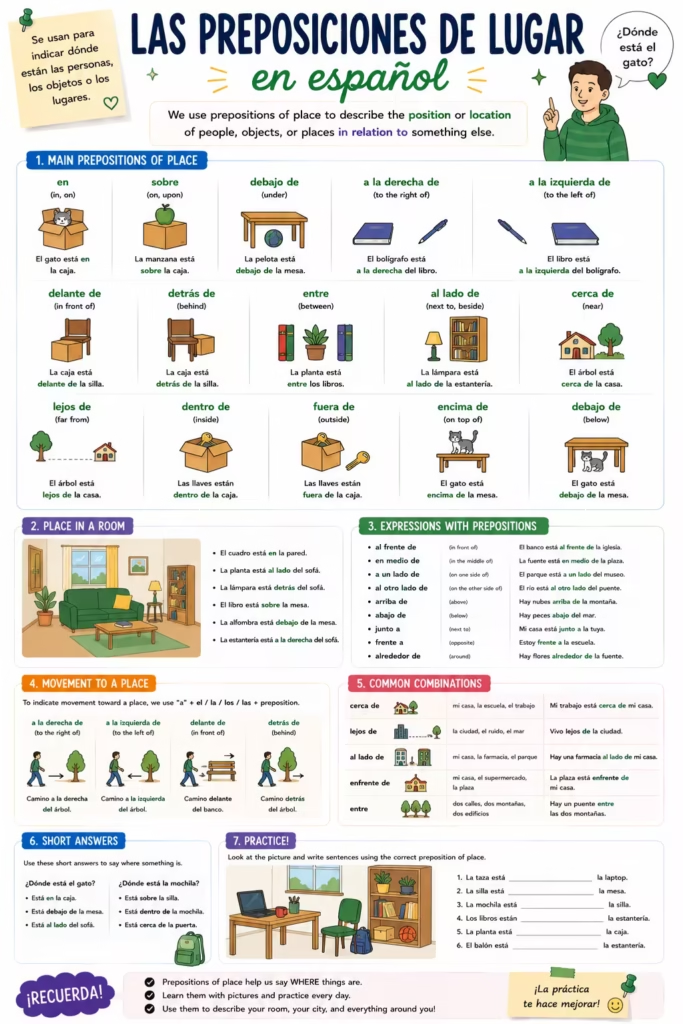
Preposiciones de lugar tell us where something or someone is.
In Spanish, you almost always use the verb ESTAR (not ser) to talk about location —
¿Dónde está el gato? — because location is a temporary state, not a permanent identity.
These little words come directly before the noun they describe, often paired with the article el / la / los / las.
🔢 The Formula
Subject
+
está / están
+
preposition
+
de / del / la…
+
reference noun
Example → El libroestáencimadela mesa. = The book is on top of the table.
📦 The 10 Essential Location Words
Core vocab
encima de
on top of / above
El gato está encima de la cama. The cat is on top of the bed.
debajo de
under / below
El perro está debajo de la mesa. The dog is under the table.
delante de
in front of
Ella está delante de la escuela. She is in front of the school.
detrás de
behind
El niño está detrás de la puerta. The boy is behind the door.
al lado de
next to / beside
La farmacia está al lado de la tienda. The pharmacy is next to the shop.
entre
between / among
El banco está entre
el parque y la iglesia. The bank is between the park and the church.
cerca de
near / close to
El hotel está cerca de la playa. The hotel is near the beach.
lejos de
far from
Mi casa está lejos de la ciudad. My house is far from the city.
a la derecha de
to the right of
El baño está a la derecha de la cocina. The bathroom is to the right of the kitchen.
a la izquierda de
to the left of
La panadería está a la izquierda de la oficina. The bakery is to the left of the office.
🛋️ Picture This — A Room Scene
🔍 Look at the scene and notice how each object’s position is described with a preposición de lugar.
⚠️ Always use ESTAR for location!
El supermercado está cerca de aquí.
✔ The supermarket is near here. (location → ESTAR)
Los niños están detrás del árbol.
✔ The children are behind the tree.
❌ El supermercado es cerca de aquí.
✗ Wrong! SER is not used for physical location.
💡 Exception:La boda es en Madrid — events use SER, but that’s a specific rule for another day!
🔬 Nuances to Know
Watch out!
encima de vs en
on top of vs on/at
El vaso está en la mesa.
“On” — general surface contact
El gato está encima de la mesa.
“On top of” — more emphasis on height
cerca de / lejos de
near vs far — always need “de”
✔ Cerca de la estación.
Near the station.
✗ Cerca la estación.
Don’t forget “de”!
entre
between 2 things — use “y” (and)
Estoy entre María y Juan.
I’m between María and Juan.
El café está entre el banco y la farmacia.
The café is between the bank and the pharmacy.
🏙️ Useful Places Vocabulary
Spanish
English
Example
la tienda
the shop
La tienda está al lado del parque.
el banco
the bank
El banco está entre la farmacia y la panadería.
la farmacia
the pharmacy
La farmacia está a la derecha del banco.
la panadería
the bakery
La panadería está cerca de mi casa.
el parque
the park
El parque está lejos del centro.
la estación
the station
La estación está detrás del hotel.
el colegio
the school
El colegio está delante de la iglesia.
la iglesia
the church
La iglesia está encima de la colina.
✏️ ¡Practica! Exercises
1
Fill in the correct preposition of place.
Choose from: encima de · debajo de · entre · cerca de · al lado de · detrás de · delante de · lejos de
a) El gato está la cama.
b) La farmacia está el banco y la tienda.
c) El libro está la mesa.
d) Mi colegio está mi casa — ¡está muy lejos!
e) La panadería está la estación.
f) Los niños están la escuela.
2
Choose the correct option.
👉 “El perro está _____ el sofá.” (The dog is under the sofa.)
👉 “La tienda está _____ el banco y la farmacia.” (The shop is between the bank and the pharmacy.)
👉 “El hotel _____ lejos de la playa.” (The hotel is far from the beach.)
👉 “El baño está _____ la cocina.” (The bathroom is to the right of the kitchen.)
3
Look at the room scene above — describe these objects in Spanish!
a) Where is the dog? (debajo / mesa)
b) Where is the cat? (encima / sofá)
c) Where is the plant? (al lado / ventana)
4
Tap the words to build the sentence in the correct order.